Rural Plumber in The Gap
Bigger blocks bring their own plumbing: tanks, pumps, long supply runs and gas bottles instead of a short street connection. Searching for a rural plumber The Gap locals trust leads here, and every job is done by a licensed plumber working across The Gap and the suburbs around it.
If we're late, $100 comes off your bill
- Licensed and InsuredEvery job done by a licensed plumber. QBCC No: 15024607
- Fixed Quote FirstFlat-rate pricing, agreed before any work starts
- Lifetime Labour WarrantyBacked by our Fix-It-or-It's-Free guarantee (T&Cs apply)
- $0 Call-Out FeesNo extra charge for nights, weekends or public holidays
Sheep runs, timber country and soldier-settler poultry farms covered this valley until the late 1950s, and small farming holdings survived into the 1980s. Larger blocks from that era still sit between the family homes, so tank-fed and long-run properties sit side by side with ordinary suburban ones.
Tank Water, Mains Water or Both
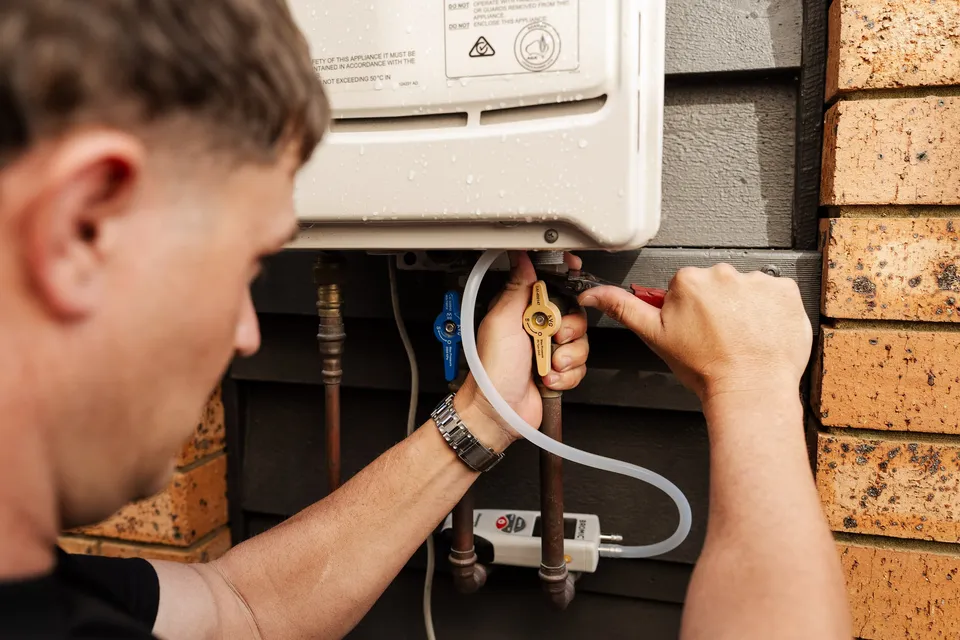
Every property runs on town water, tank water, or both. The plumbing differs because a tank supply is pumped or gravity fed from the tank's height, rather than pushed by the street main.
Queensland's home owner guide allows rainwater for drinking only where no town supply reaches the property, since a reticulated supply is the safest and most reliable for that purpose. Brisbane City Council goes further and does not recommend tank rainwater for drinking or cooking, because the quality of stored rainwater varies greatly. Anyone relying on a tank manages both its safety and its supply themselves.
The gear that carries most of the work:
- The pump that pushes tank water to the taps; our tank pumps page covers what they do.
- The filter and its cartridge, which anyone may swap as unregulated work, provided it still meets the standards; see water filter installation.
- The tank and its plumbing, which we connect and maintain; start at rainwater tank plumbing.
Gas Bottles on a Rural Property
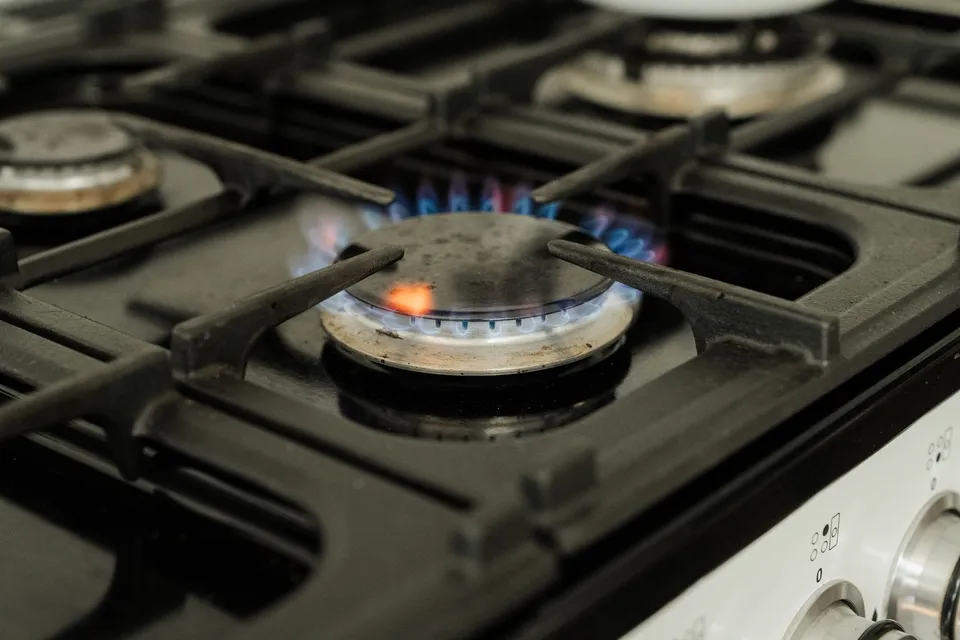
Keep LPG cylinders, in use and in storage, somewhere with plenty of air movement, well away from heat and ignition sources. Keep spares in a set secure spot, and keep each valve sealed even on an empty bottle.
In transit, secure the cylinders and never carry them in the passenger compartment.
A portable cylinder, the barbecue and camping type usually holding 9 kg, needs a current test stamp before a station will refill it, and the station checks the date on every bottle. The stamp stays valid for ten years from the test date.
A leak of LPG sinks and pools, because the gas is heavier than air, collecting in low ground and drains. That behaviour is one reason gas work, which covers the whole system along with its pipework and connections, belongs to a licensed gasfitter only.
If you smell gas at a bottle or appliance, turn the appliance off, open doors and windows, and leave electrical switches alone. Still smelling it? Shut the supply at the cylinder or meter and call us, or 000 if the smell persists.
Who Owns the Pipe From Meter to House
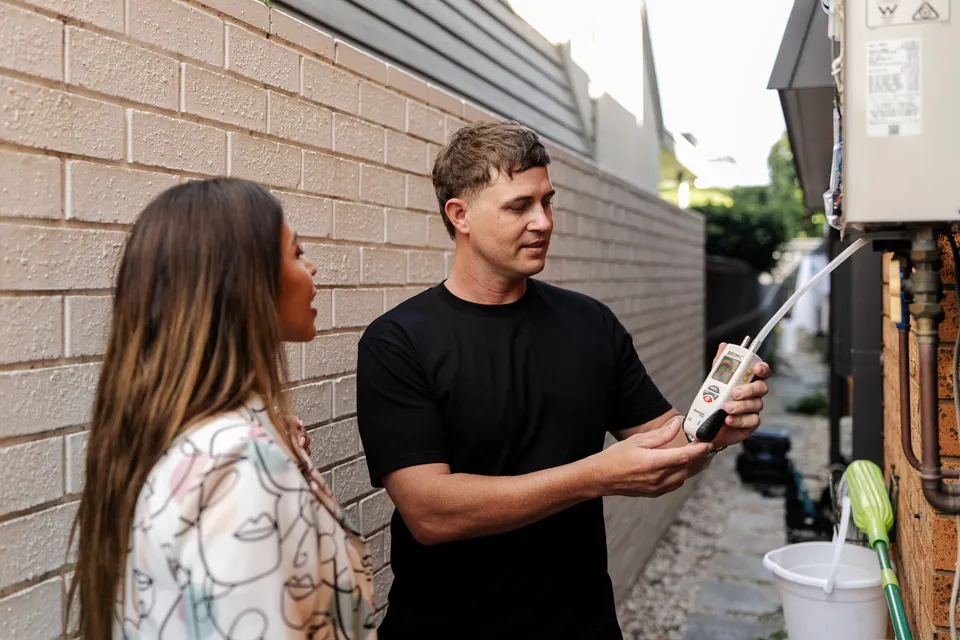
Everything from the meter to the fixtures inside is the owner's to maintain, so a big block means a long stretch of private pipe to look after. Urban Utilities looks after the public mains and sewer; the pipes on your side of the meter are the owner's.
Replacing that supply piping in an existing building is notifiable work. A licensed plumber does the job, reports it to the QBCC on a Form 4 within 10 business days of completion, and hands you a copy.
Jobs around the trench sit outside the rules:
- Digging or backfilling the trench is unregulated, so anyone may do it.
- Changing the meter itself or its related pipework needs a Water Approval from Urban Utilities first.

Why Pressure Drops on a Long Run
Friction along the pipe wall steals pressure, and the longer or narrower the line, the more it loses. Taps at the far end of a long run are the first to feel it.
A pressure pump fitted on the line or the tank lifts the pressure back up, so every outlet runs properly again. Urban Utilities supplies at least 210 kPa at the meter for each customer, though trickle-feed areas, typically rural South East Queensland, and designated low-pressure zones sit outside that minimum.
Pipe size is part of the fix. A wider line on a new run loses less to friction than a narrow one, which is worth discussing before any trench opens.
Acreage Conditions Around The Gap
The Gap grew beside the reservoir that Enoggera's 1866 dam created to feed Brisbane's water, and homes here still climb granite and phyllite slopes. Shallow stony ground with granite grit just below the surface makes trenching slow, so a new supply line on a sloping block often means breaking rock and routing around boulders.
Blocks along Mount Nebo Road, climbing out of the valley toward the bushland, tend to keep their older, larger layout and carry longer runs from the street than the tighter estates. That ground is the second big cost driver after how far the line has to travel, and it shapes the quote before we lift a shovel.
How We Handle Acreage Work
- 1

Get in touch
Call (07) 3524 7137 or send a quick message about the job in The Gap, and we'll ask what we need to know.
- 2
We walk the whole supply
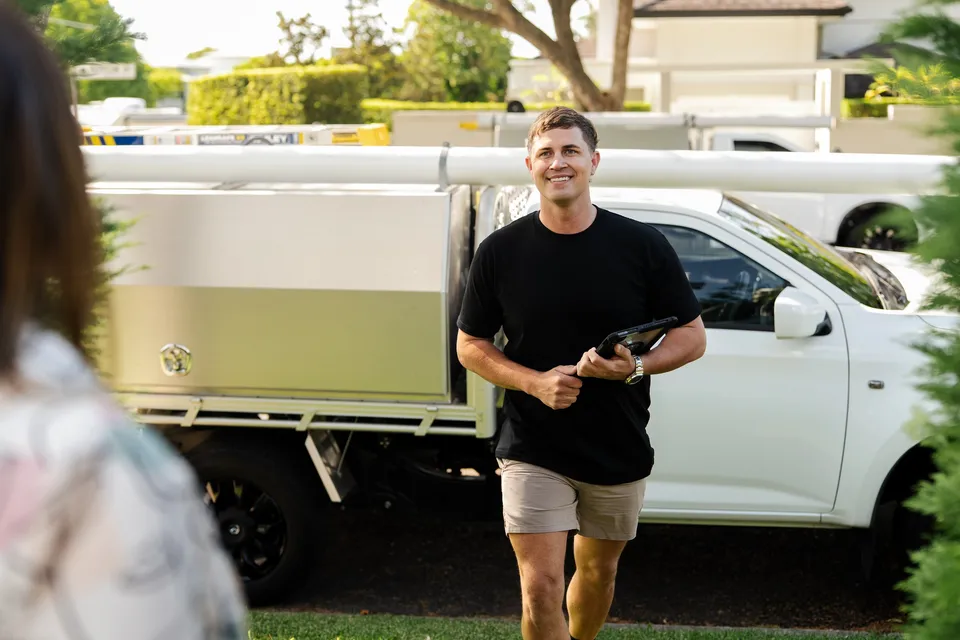
We trace the line from the meter or tank to the house, checking the pump, filter and any gas bottles on the way. Before quoting, we note where the run crosses rock, driveways or garden beds.
- 3
Sign off the quote
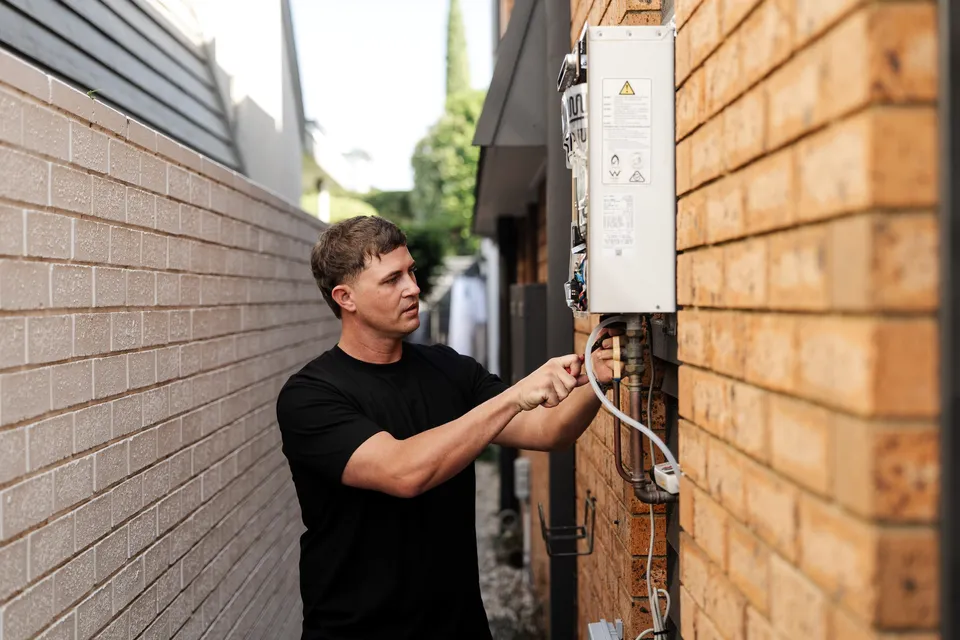
You'll see a fixed quote before any work starts, with flat-rate pricing and no hidden fees. The job starts when you're happy with it.
- 4
Pay once it's done
Pay by card or EFTPOS on site after the work's finished, or choose Fix now, pay later.
Plumbing job in The Gap?
$0 call-out fees, available 24/7, and same-day where we can.
Questions We Get About Acreage Plumbing
Call (07) 3524 7137Can I drink tank water at my The Gap property?
No, not while town water reaches your block. Queensland only allows rainwater for drinking where no reticulated supply exists at all, and Brisbane City Council does not recommend it for drinking or cooking. The owner manages the tank's safety and supply.
Who can replace the water line from the meter to the house?
A licensed plumber, and nobody else. Everything past the Urban Utilities meter is the owner's pipe to maintain. Replacing it in an existing home counts as notifiable work, so the plumber lodges Form 4 paperwork with the QBCC inside 10 business days and hands you a copy.
Why was my gas bottle refused for refilling?
Because its test stamp has run out. A portable cylinder needs a stamp no older than ten years before a station will refill it, and filling stations check the date on each bottle. An expired bottle goes back for testing first.
Can I repair or swap a gas cylinder valve myself?
No. Cylinder valves are never a home handyperson job, because gas work belongs to a licensed gasfitter alone. If a valve is weeping or a rotten-egg smell hangs around the bottle, keep clear and call (07) 3524 7137.
How much does a new water line cost on a big block?
The price is set by a fixed quote before any work starts. The biggest drivers are how long the run is, the ground the trench crosses, and the pipe size and fittings, so the quote reflects your block.

Book Your Acreage Plumber TodayWe'll call you back.
Book on (07) 3524 7137 for plumbing anywhere in The Gap. We're available 24/7, there's no extra charge for nights, weekends or public holidays, and every job comes with $0 call-out fees.
To claim your $0 call-out fee, call (07) 3524 7137 today.